

Construction projects generate significant amounts of waste, from leftover lumber and drywall to packaging, concrete, and demolition debris. Without a proper plan, managing these materials can become expensive, time consuming, and disruptive to daily operations.
A well organized construction waste management plan helps contractors control disposal costs, improve site safety, reduce unnecessary hauling, and keep projects on schedule. It also supports sustainability goals by identifying opportunities to reuse, recycle, and reduce waste.
At Mobile Dumpster Crusher, we work with construction companies, renovation contractors, and property managers who want to make waste disposal more efficient. We understand that managing construction debris involves more than simply renting a dumpster.
Whether you are planning a commercial development or a building renovation, having a clear waste management strategy from the beginning can make a noticeable difference.
What Is a Construction Waste Management Plan?
A construction waste management plan is a documented strategy outlining how waste will be collected, separated, stored, recycled, and removed throughout a construction project. Rather than dealing with overflowing dumpsters as problems arise, contractors can establish procedures before work begins.
An effective plan should identify:
- Expected waste materials: Estimate the types and quantities of debris generated during each construction phase.
- Waste segregation procedures: Determine which materials should be separated for recycling or specialized disposal.
- Recycling and reduction goals: Establish measurable targets for minimizing landfill waste.
- Dumpster placement: Choose accessible locations that support efficient waste collection.
- Hauling and compaction schedules: Plan how waste will be managed without interrupting operations.
- Team responsibilities: Assign employees or subcontractors to oversee waste handling and compliance.
These elements create a practical foundation for more efficient jobsite waste management.
1. Identify and Segregate Construction Waste
One of the first steps in construction waste reduction is understanding what materials your project will generate. Construction sites often produce a mixture of recyclable materials, reusable items, and general debris.
When everything goes into the same container, opportunities for recycling may be lost. Separating materials at the source helps improve recycling efficiency and prevents contamination.
| Waste Material | Recommended Management Approach |
|---|---|
| Wood and lumber | Reuse suitable pieces or recycle where accepted |
| Concrete and masonry | Send to approved aggregate recycling facilities |
| Metal scraps | Collect separately for metal recycling |
| Cardboard and packaging | Keep clean and dry for recycling |
| Drywall | Explore recycling options where available |
| General construction debris | Use approved dumpsters and compaction when suitable |
| Hazardous materials | Arrange specialized handling and disposal |
Not every project needs separate dumpsters for every material. Contractors should consider waste volume, available space, and local recycling services when choosing a segregation strategy.
2. Establish Clear Recycling and Waste Reduction Goals
Setting realistic recycling goals helps contractors measure the effectiveness of their waste management efforts. For example, a project may aim to divert a defined percentage of suitable materials from landfills through recycling and reuse. The exact target should depend on project requirements and available recycling facilities.
Construction waste reduction also begins before materials reach the dumpster. Ordering accurate quantities, protecting materials from damage, and reusing suitable supplies can prevent unnecessary waste. Contractors should regularly track disposal volumes, recycling receipts, and hauling frequency.
Projects pursuing LEED certification may also need documented construction waste management procedures and diversion reporting, depending on the applicable rating system.
3. Plan Dumpster Placement and Site Logistics
Dumpster placement directly affects jobsite efficiency and safety. Poorly positioned containers can block delivery routes, interfere with equipment movement, and force workers to carry debris longer distances.
Before construction begins, contractors should identify suitable waste collection areas based on site layout, accessibility, and anticipated debris volumes. Important considerations include:
- Easy access: Position dumpsters where workers can dispose of waste without unnecessary travel.
- Truck clearance: Ensure hauling vehicles and mobile crushing equipment have adequate access.
- Worker safety: Keep containers away from emergency exits, pedestrian routes, and hazardous work areas.
- Available space: Avoid placing dumpsters where they interfere with material deliveries or equipment.
- Waste collection frequency: Schedule servicing based on expected waste generation.
- Site conditions: Verify that the ground can safely support loaded dumpsters and servicing equipment.
These simple decisions can prevent costly delays and help maintain cleaner construction sites.
4. Include Dumpster Compaction in Your Waste Reduction Strategy
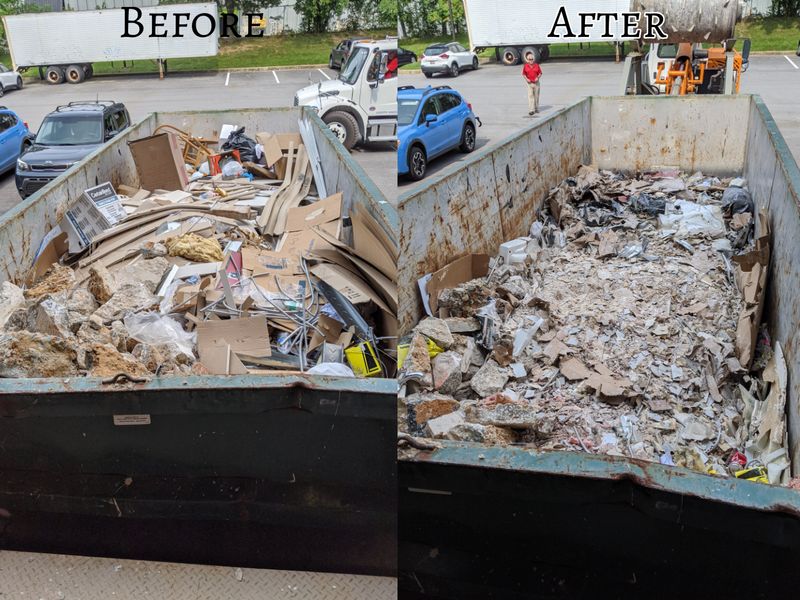
One commonly overlooked component of jobsite waste management is dumpster compaction. Construction debris often contains large air pockets between bulky materials. Even when a dumpster looks full, much of its available capacity may remain unused.
Mobile dumpster compacting service addresses this problem by compressing suitable waste directly inside the container, creating additional room without requiring an immediate dumpster replacement. At Mobile Dumpster Crusher, our service can increase available dumpster capacity by up to 65 percent, depending on the waste materials and conditions. This provides several operational advantages:
Fewer Dumpster Hauls: More usable capacity means contractors can potentially reduce the number of pickups needed throughout a project. Fewer hauls can translate into lower transportation expenses.
Improved Project Efficiency: Overflowing dumpsters can interrupt construction activities while crews wait for replacements. Compaction helps extend the use of existing containers and reduces unnecessary scheduling disruptions.
Reduced Environmental Impact: Fewer hauling trips can reduce fuel consumption and transportation related emissions.
However, compaction should complement recycling and waste segregation rather than replace them. Recyclable materials should be separated before crushing whenever required by the recycling program.


5. Assign Responsibilities and Monitor Waste Management Performance
Even a detailed construction waste management plan will only work when everyone understands their responsibilities. Project managers should establish clear procedures for waste disposal and communicate them to employees and subcontractors.
Designating a waste management coordinator can help ensure dumpsters are used correctly, recyclable materials remain separated, and collections are scheduled appropriately. Contractors should also review waste management performance during regular project meetings.
Useful performance indicators include total dumpster hauls, disposal expenses, recycling rates, and instances of overflowing containers. Monitoring these details allows teams to identify inefficiencies and adjust their strategies as the project progresses.
Frequently Asked Questions
Why Do Contractors Need a Construction Waste Management Plan?
A construction waste management plan helps contractors control disposal expenses, organize waste collection, improve site safety, and support recycling goals. Establishing procedures before construction begins also reduces confusion among workers and subcontractors. For larger projects, a documented plan can support sustainability reporting and specific project requirements.
What Is the Best Way to Reduce Construction Waste?
The most effective approach combines accurate material ordering, reuse, recycling, proper waste segregation, and efficient dumpster management. Contractors should also consider mobile dumpster crushing to maximize existing container capacity. Combining these strategies can reduce unnecessary hauling expenses and improve overall jobsite efficiency.
How Does Dumpster Crushing Fit Into a Waste Management Plan?
Dumpster crushing helps contractors manage bulky debris more efficiently by compressing suitable materials inside existing dumpsters. This creates additional space and can reduce the frequency of hauling trips. It works best alongside recycling, waste segregation, and responsible disposal practices.
Can Dumpster Crushing Help With Green Construction Goals?
Yes. By reducing unnecessary hauling trips, dumpster crushing can help lower fuel consumption and transportation related emissions. It can complement broader sustainable construction practices, including recycling and material reuse. However, compaction itself does not automatically qualify waste for recycling credits or LEED certification points.
How Often Should Contractors Review Their Waste Management Plan?
Contractors should review their plan throughout the project, especially when construction phases change or waste volumes increase. Regular monitoring helps identify overflowing dumpsters, inefficient hauling schedules, and opportunities to improve recycling or compaction practices.
Why Construction Waste Planning Matters for Michigan Contractors
Construction and renovation projects throughout Metro Detroit require efficient waste management to keep operations organized and costs under control.
We work with businesses across the region, including Troy, Sterling Heights, Plymouth, and surrounding communities, helping them make better use of their existing dumpsters.
Whether managing commercial construction, property renovations, or industrial projects, contractors can benefit from combining proper waste planning with mobile dumpster crushing.
Make Your Next Construction Project More Efficient
A successful construction waste management plan should address everything from waste segregation and recycling to dumpster placement, site logistics, and compaction. With the right strategy, contractors can reduce unnecessary hauling, maintain cleaner jobsites, and improve project efficiency.
At Mobile Dumpster Crusher, we help businesses maximize dumpster capacity and manage construction debris more effectively without unnecessary interruptions. Contact us today to request a trial and discover how our mobile dumpster crushing service can support your construction waste reduction goals.